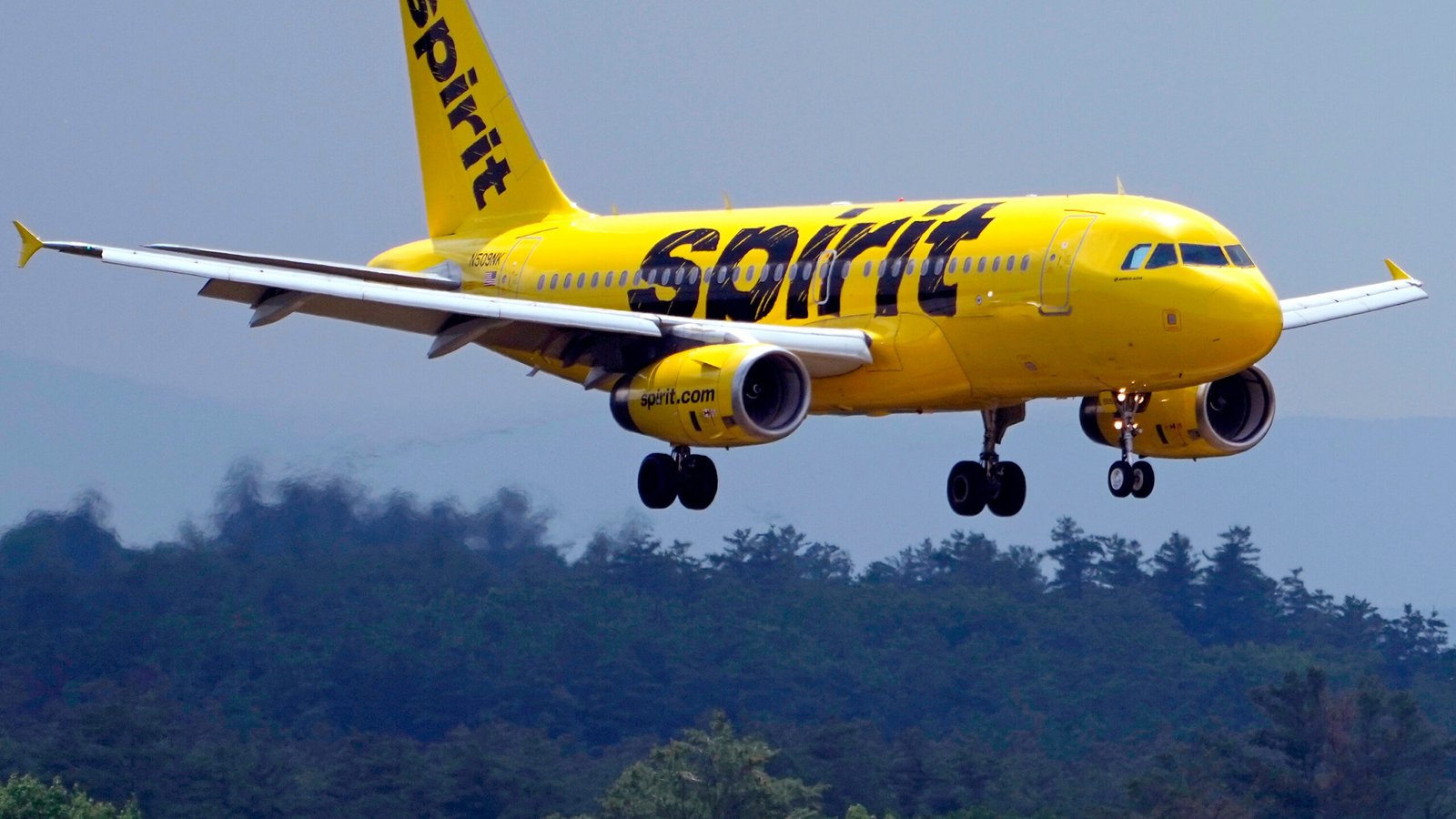
Spirit Airlines is shutting down, in a move that will affect thousands of scheduled flights and nearly as many employees.
Subscribe to read this story ad-free
Get unlimited access to ad-free articles and exclusive content.

The troubled budget carrier cancelled all flights and announced an “orderly wind-down” of operations, effective immediately early Saturday.
“To our Guests: all flights have been cancelled, and customer service is no longer available,” the company said in a statement. “We are proud of the impact of our ultra-low-cost model on the industry over the last 34 years and had hoped to serve our Guests for many years to come,” it added.

Spirit, which has struggled to maintain consistent profitability since the Covid-19 pandemic, had been looking to emerge from its second bankruptcy in less than a year. But those plans were derailed amid soaring jet fuel costs sparked by the outbreak of the war with Iran.
“Despite the Company’s efforts, the recent material increase in oil prices and other pressures on the business have significantly impacted Spirit’s financial outlook,” the company’s statement said. “With no additional funding available to the company, Spirit had no choice but to begin this wind-down.”
Last month, Spirit approached the White House for financial assistance, and President Donald Trump initially appeared receptive. But on Friday, reports surfaced that a wind-down was imminent after negotiations between the company, its bond holders and the White House appeared to break down.
“Sustaining the business required hundreds of millions of additional dollars of liquidity that Spirit simply does not have and could not procure,” Spirit President and CEO Dave Davis said in the company’s statement. “This is tremendously disappointing and not the outcome any of us wanted.”
No Spirit flights were in the air as the shutdown took effect, but it will have an immediate impact on those who were set to travel, as well as those mid-trip with return flights booked. On the website dedicated to its shutdown, the airline said passengers who were expecting to travel should not go to the airport, directing them to a page for refund status and next steps.
The airline said it will automatically process refunds for any flights purchased through it with a credit or debit card, but passengers who did not book directly will need to request a refund via their travel agent.
Passengers will not be reimbursed for costs incurred as a result of the flight cancellations, such as emergency hotels, unless otherwise covered by their travel insurance plans.
Transportation Secretary Sean Duffy encouraged those who bought tickets via credit card to initiate a chargeback. He announced actions to support Spirit passengers and employees, including an agreement with United, Delta, JetBlue and Southwest to cap ticket prices for Spirit customers who need to rebook cancelled flights.
“We’ve activated our airline partners to ensure passengers are not stranded, communities maintain route access, fares do not skyrocket, and Spirit’s workforce is connected to new job opportunities,” Duffy said in a statement.
The trade association of top U.S. airlines, Airlines for America, listed measures major carriers are taking to support those affected by the shutdown. Some are offering “rescue fares” on Spirit routes and bringing Spirit crews who may be stranded home. Others offered price capping on certain routes served by Spirit and employment opportunities for the airline’s former staff.
American Airlines said it was reviewing opportunities to add additional capacity on routes previously served by Spirit.
At its height of success in the mid-2010s, Spirit opened as many as 28 new routes in less than a year and the company was valued at as much as $6 billion. It attracted passengers with its “bare fare” offerings, where everything from drinks to overhead carry-on bags cost extra, while base airfare was kept to a minimum.
And while it only carried a small slice of the flying public, Spirit’s profitability was, at one point, among the top three of major U.S. airlines.
Long the subject of takeover rumors in an industry known for them, Spirit attempted to sell itself to JetBlue in 2022 after it struggled to regain financial footing in the wake of the pandemic. Had that happened, it would have created the fifth-largest airline in the country.
But Biden-era officials at the Justice Department argued that the combination would violate federal antitrust regulations, and in 2024 a judge sided with them and struck down the merger agreement.
Within months, Spirit filed for bankruptcy protection for the first time to satisfy debt obligations — the first major U.S. airline to file for Chapter 11 since 2011.
A judge approved a reorganization plan in early 2025, only for the airline to file once again in August amid weakening demand among budget flyers and spiraling costs. Talks about a proposed merger with Frontier Airlines emerged in December, but ultimately led nowhere.
Spirit traces its origins to a Michigan-based trucking company founded in the 1960s, with air operations starting up in the 1980s. In 1999, the company moved its headquarters to the Fort Lauderdale area in Florida, where it has been located ever since. At the end of 2025, it employed approximately 17,000 personnel.