West Hollywood lost 120 rent-stabilized units in roughly two and a half years. The properties were demolished, the lots are still empty, and there’s no deadline requiring anyone to build anything to replace them.
That was the takeaway from what Leona Rollins told the Rent Stabilization Commission on April 23.
Rollins is the City’s Rent Stabilization Manager. She said 36 rent-stabilized properties were withdrawn from the market under the Ellis Act between 2020 and 2025. But most of that didn’t happen over five years. The City froze Ellis Act applications at the start of the COVID-19 pandemic in spring 2020 and didn’t resume accepting them until fall 2023. All 36 properties, all 120 units — gone in about two and a half years.
As of April 18, she said, no new Ellis Act applications had come in for 2026. She’s starting to see a downward trend.
The Ellis Act is a California state law. It lets property owners exit the rental market entirely. It overrides local rent stabilization protections. Once a unit’s pulled under the Ellis Act, it’s gone from the rent-stabilized housing stock permanently. The City can’t stop it.
Nothing Was Built

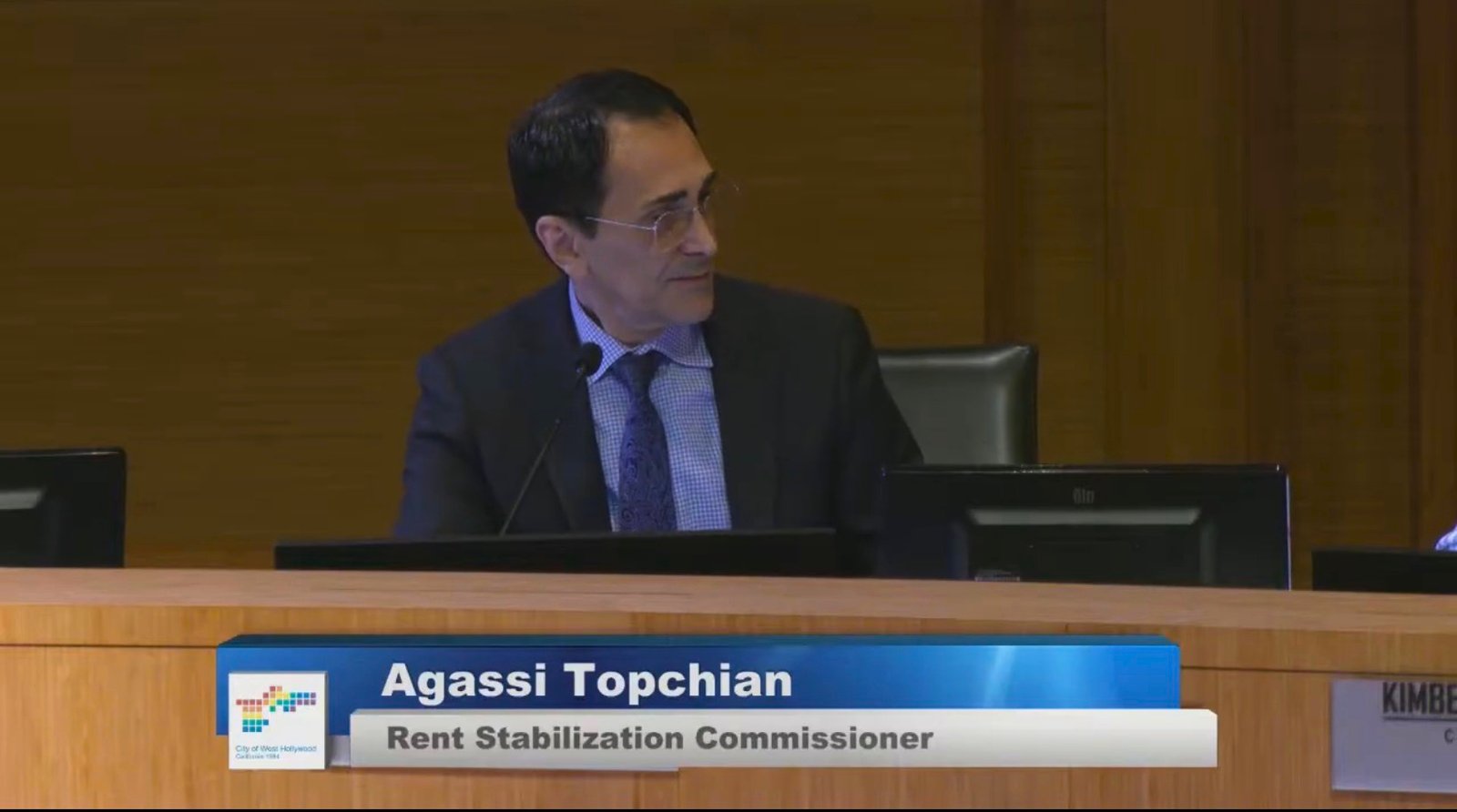
Commissioner Agassi Topchian asked how many of those 36 demolished properties had been rebuilt.
None.
“Several of these properties remain as empty lots,” Rollins said. “As of today, those properties were demolished. There was nothing that was actually replaced there.”
California law doesn’t require a property owner who exits under the Ellis Act to rebuild on any timeline. Density bonuses and other state incentives exist. But when they use them is entirely up to them.

It’s not without precedent in West Hollywood. The City itself used the Ellis Act nearly 20 years ago to evict tenants from the Tara House on Laurel Avenue. The building sat unoccupied for years before eventually being converted into an arts hub with artist-in-residence apartments. The grounds became a city park in the interim.
That’s separate from the 10-year right of first refusal that displaced tenants receive. If a property is ever redeveloped, former tenants have a decade to claim first right to return. The owner, though, has no corresponding deadline to build anything at all.
Topchian said that was troubling. Tenants are gone. The units are gone. The lots sit empty. The City can’t make anyone build.
736 New Units — Not a Replacement

During the same period, West Hollywood added 736 inclusionary housing units through new development. On paper, that’s more than six times the 120 units lost.
It’s not a substitute.
Inclusionary units are priced on Area Median Income levels. Those fluctuate. They’re available to very low, low, and moderate income households only. And they’re dependent on new development happening at all — which requires land, financing, and someone willing to build.
Rent-stabilized units serve a different population. Long-term tenants, many elderly and on fixed incomes, pay well below current market rates. Studios in West Hollywood now average between $2,200 and $2,300 a month. One-bedrooms run $3,200 to $3,300. Two-bedrooms average around $4,000. Tenants who’ve been in stabilized units for years pay significantly less than any of those numbers.
“Inclusionary housing units are not one-to-one replacements for rent-stabilized units,” Rollins said.
The Count May Be Higher
Commissioner Kimberly Copeland said the 120-unit figure probably undercounts the real loss.
Properties where tenants were already evicted under Ellis Act provisions — but where nothing’s been demolished or built yet — aren’t included in the tally. Rollins confirmed that.
Copeland also raised buyouts. When a new owner buys a rent-stabilized building and pays tenants to leave, the unit resets to market rate. No Ellis Act filing required. Rollins said the City tracks buyout agreements — owners have to submit them, the City reviews and approves them, and tenants have 30 days to back out. She didn’t have the buyout numbers on hand. She said she’d bring them to a future meeting.
Copeland pointed to one recent West Hollywood project: eight rent-stabilized units demolished, one inclusionary unit built in their place. Net loss of seven. The project was approved before a state law took effect requiring one-for-one replacement of demolished rent-stabilized units. Projects approved before that law aren’t subject to it. And there’s no deadline requiring them to break ground.
“Unfortunately,” Copeland said.
This is the second straight meeting at which the commission has pressed for data on what West Hollywood has lost. At the March 26 meeting, commissioners directed Rollins to pull five years of demolition and replacement numbers, including before-and-after rent comparisons. The April 23 Ellis Act report was the direct response.
Displaced tenants are entitled to relocation packages. Those classified as low income, senior, or disabled receive higher amounts. Ellis Act displaces also get a 10-year right of first refusal if the property is eventually redeveloped and go to the top of the waitlist for inclusionary housing units as they come available.
“The whole purpose of that,” Rollins said, “is that people that want to live, work, and go to school in the City of West Hollywood should have the opportunity to continue to live, work, and go to school in the City of West Hollywood.”