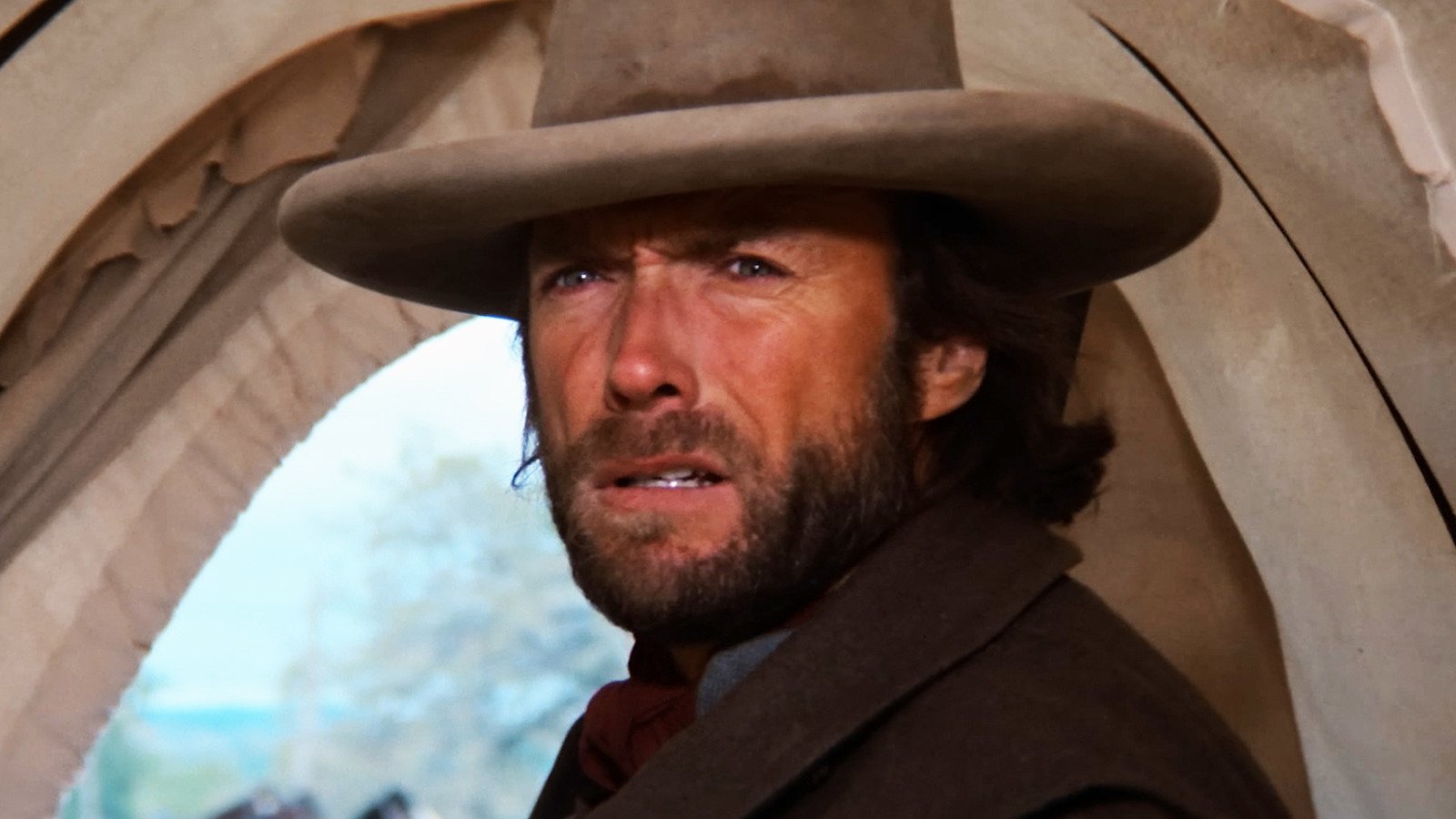
Clint Eastwood started his movie career with a Spaghetti Western remake of a Japanese classic (“A Fistful of Dollars,” which was inspired by “Yojimbo”). But if you ask the man whether his own Westerns should be remade, he’ll tell you to go get your own material.
At a time when our nostalgia-mad monoculture has produced something like the “Harry Potter” TV series, it can often feel as though we’re in the midst of remake mania. But Hollywood has been obsessed with rehashing prior material literally since the advent of sound in film. Back in the 1930s, Warner Bros. bought First National Pictures and set about updating several silent oaters from the newly-acquired catalog. This led to multiple films being released that reused footage from silent features of the decade prior. During this time, John Wayne was cast in the 1932 Western “Ride Him, Cowboy,” which was essentially a remake of the Ken Maynard-led 1926 film “The Unknown Cavalier.” Wayne landed the role simply because he resembled Maynard enough that producers could splice footage of the former star with the Duke and audiences would be none the wiser.
Eastwood never found himself doubling for one of his forebears in the same way. But having come to prominence in the 1960s, by 2011 he should have been well aware of Hollywood’s penchant for remakes. When he found himself inundated with requests to produce updated versions of his classic Westerns, however, he seemed to be surprised — hostile, even.
Clint Eastwood thinks filmmakers should get their own material
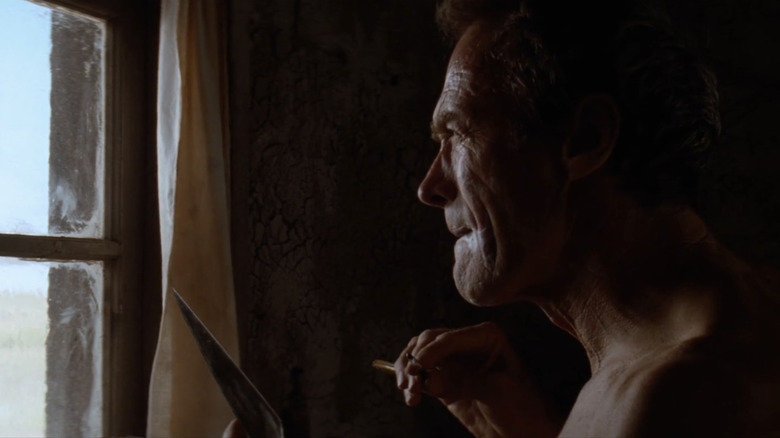
Some remakes are great. John Wayne’s Oscar-winning 1939 Western “Stagecoach” got a 1966 remake that was surprisingly good and even managed to outdo John Ford’s classic in many ways. That said, there is something inescapably depressing about the worst remakes, which often come far too soon after the originals on which they’re based and simply serve as reminders of why repeatedly going back to the same cinematic well is typically a game of diminishing returns.
Clint Eastwood seemed to hold a similar view. When asked by GQ about how his projects often diverged from the standard Hollywood fare, the actor/director said:
“Plagiarism is always the biggest thing in Hollywood. I have people all the time who want to know if they can remake ‘The Outlaw Josey Wales’ or ‘Unforgiven,’ and I go, ‘Jeez, that was just yesterday, why would you want to remake that? I mean, you can. I’m not stoppin’ ya. But what’s the matter with just getting your own material?'”
In 2013, two years after this interview, Eastwood’s revered 1992 revisionist Western “Unforgiven” did actually get an underseen Samurai remake that managed an impressive 94% Rotten Tomatoes score. In that case, however — in the same way that Eastwood’s first major film “A Fistful of Dollars” was essentially a remake of “Yojimbo” — the Japanese “Unforgiven” remake transposed the story to a new country and culture entirely. In his GQ comments, one gets the sense Eastwood is talking more about the Hollywood brand of remake that merely rehashes the same story with little to no meaningful changes. Still, it’s a little rich to hear the man who became famous off the back of a Westernized “Yojimbo” telling filmmakers to get their “own material.”
Clint Eastwood thinks remakes are like 3D movies
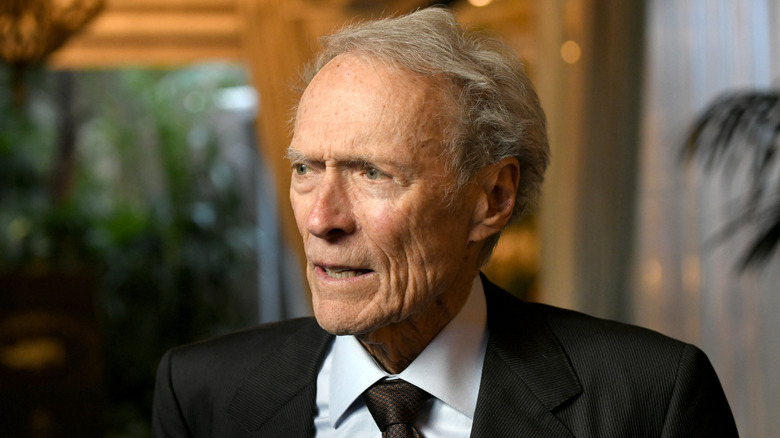
In his GQ interview, Clint Eastwood went on to liken Hollywood’s remake obsession with the way in which 3D movies have fallen in and out of favor. “I remember the first time [3D] came out,” he said, “and they’re going through that again, and it’s starting to backlash.” Just what backlash he was referring to isn’t entirely clear but he was talking just a couple of years after 3D had experienced a high point with James Cameron’s “Avatar” in 2009. After that, audience interest started to decline, and it seems Eastwood noticed.
But whereas 3D has come and gone throughout the history of film, remakes have always been a steady and permanent feature of Hollywood filmmaking. Heck, 1941’s “The Maltese Falcon” was a remake; “Scarface” was a remake. The industry can’t get enough and it’s all because studios want to minimize risk. Sadly that risk-averse approach to moviemaking has only increased in recent years as fewer people actually make the trip to the multiplex. The 2025 box office was a major disappointment, and amid this sad state of affairs new and original ideas are overlooked in favor of revisiting established IP.
But make no mistake, studios have been in the remake game since they found themselves with enough footage to repackage in the early 20th Century. In that sense, Eastwood’s opposition to the remake is refreshing in an industry that’s been obsessed with regurgitation for a century. But also, is a “The Outlaw Josey Wales” remake really that bad an idea?